Tire pressure drops in colder weather because cooling air exerts less pressure inside the tire, even when no air has escaped. For Manitoba drivers, the best response is to check tire pressure regularly and inflate tires to the vehicle manufacturer’s recommended cold pressure, rather than simply waiting for warmer weather.
Why Does Tire Pressure Go Down in Cold Weather?
Air pressure comes from air molecules moving and pressing against the inside of a tire. As temperatures fall, the molecules move more slowly and create less pressure.
That means a lower tire pressure reading doesn’t automatically indicate a puncture.
According to Transport Canada, tire pressure drops by approximately 1 psi (7 kPa) for every 5°C decrease in temperature.
For example, if the temperature falls from 5°C to −15°C, tire pressure could decrease by approximately 4 psi without a leak.
This is an estimate, so it’s still important to check each tire with a pressure gauge.
Low Pressure Affects More Than the Dashboard Light
Underinflated tires can affect how your vehicle handles, how much fuel it uses and how quickly its tires wear.
Maintaining the correct pressure matters for winter driving safety and tire life, not just clearing a dashboard warning.
- Handling: Low tire pressure can affect steering response, handling and braking performance. This is especially important when Manitoba roads are slippery.
- Fuel efficiency: Underinflated tires create more rolling resistance, which can increase fuel consumption.
- Tire wear: Low pressure causes tires to flex more than intended, which can lead to uneven tread wear and shorten their lifespan.
Keeping your tires properly inflated helps them perform as intended.
Set Winter Tire Pressure Using Your Vehicle's Instructions
The correct winter tire pressure is the vehicle manufacturer’s recommended cold inflation pressure for your approved tire setup.
You can usually find this information on the tire information label inside the driver’s door opening or in your owner’s manual.
Front and rear tire pressures may differ, so check the label instead of assuming all four tires require the same pressure.
Don’t use the maximum pressure printed on the tire’s sidewall as your target. This number indicates the tire’s maximum permitted inflation pressure, not necessarily what your vehicle requires.
You also shouldn’t deliberately lower your tire pressure for snowy public roads. Follow your vehicle manufacturer’s recommendations.
If your winter tires use a different approved size or you’re unsure which pressure applies, ask your tire service provider for guidance.
Build a Practical Manitoba Winter Tire Pressure Routine
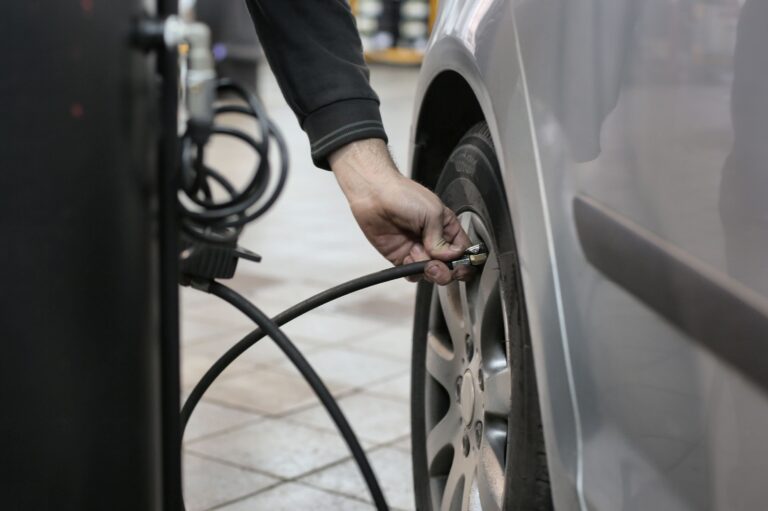
Check your tire pressure at least once a month throughout winter using a reliable pressure gauge.
Transport Canada also recommends measuring tire pressure when tires are cold. For Manitoba drivers, it’s a good idea to add an extra check after a major temperature drop or before a long highway trip.
Follow these steps:
- Start with cold tires. Ideally, check pressure before your first drive, after the vehicle has been parked for at least three hours.
- Read the vehicle label. Find the recommended front and rear tire pressures and check whether your gauge measures psi or kPa.
- Measure every tire. Remove each valve cap, press the gauge onto the valve and check the reading.
- Adjust and recheck. Add air as needed, measure again and replace the valve caps.
- Check the spare, if equipped. Spare tires may require a different pressure, so follow the manufacturer’s instructions.
Remember that driving warms your tires and can increase their pressure.
Don’t release air from warm tires simply because the reading is higher than the recommended cold pressure. Recheck once the tires have cooled.
What Should You Do When the Tire Pressure Warning Light Comes On?
If your tire pressure monitoring system (TPMS) warning light appears, check your tires as soon as it’s safe to do so.
A steady warning light generally means at least one tire is significantly underinflated.
You might notice the light appearing during a cold Manitoba morning and disappearing after you’ve been driving. However, that doesn’t necessarily mean your tires are properly inflated.
The National Highway Traffic Safety Administration (NHTSA) recommends checking tire pressure even when the warning light turns off after warming up.
Here’s what to do:
- Stop somewhere safe and inspect your tires. If a tire appears flat, has visible damage or your vehicle feels unstable, don’t continue driving. Arrange roadside assistance.
- Measure all four tires. Use a pressure gauge rather than relying only on the dashboard warning.
- Inflate to the recommended pressure. If your tires are warm, follow your vehicle manufacturer’s instructions and recheck the pressure when they’re cold.
- Follow your owner’s manual. Some vehicles require the TPMS to be reset or recalibrated after adjusting tire pressure.
A flashing warning light or one that stays on despite proper inflation may indicate a TPMS problem that requires service.
Recognize When Pressure Loss Needs Professional Attention
While some pressure loss is normal during colder weather, repeated top-ups shouldn’t be ignored.
If one tire keeps losing pressure while the others remain stable, there may be a puncture, damaged valve or wheel-sealing issue.
Have the tire inspected rather than assuming the problem is caused by temperature.
A technician can check for leaks, examine the tire’s condition and recommend whether a repair or replacement is needed.
Keep Your Tires Ready for Manitoba Winters with Birchwood
Cold weather can cause tire pressure to drop, but regular checks and proper inflation can help you stay prepared.
Check your pressure monthly, pay attention to changes in temperature and always follow your vehicle manufacturer’s recommended settings.
If your tires continue losing pressure, your warning light won’t go away or you’d simply like help preparing your vehicle for winter, Birchwood’s service teams can help.
Book an appointment for a tire inspection or seasonal vehicle service at Birchwood!
Disclaimer: The information provided on this blog is for general informational and educational purposes only. While we strive to keep all details accurate, information—including third-party product availability, specifications, vehicle pricing, and external data—is subject to change without notice. Reference to any specific third-party brands, products, or services does not constitute an endorsement, and we do not guarantee the ongoing accuracy of information sourced from external websites. Birchwood accepts no liability for any actions taken based on the content of this site. Always verify current pricing and availability directly with the respective manufacturer or dealer.